


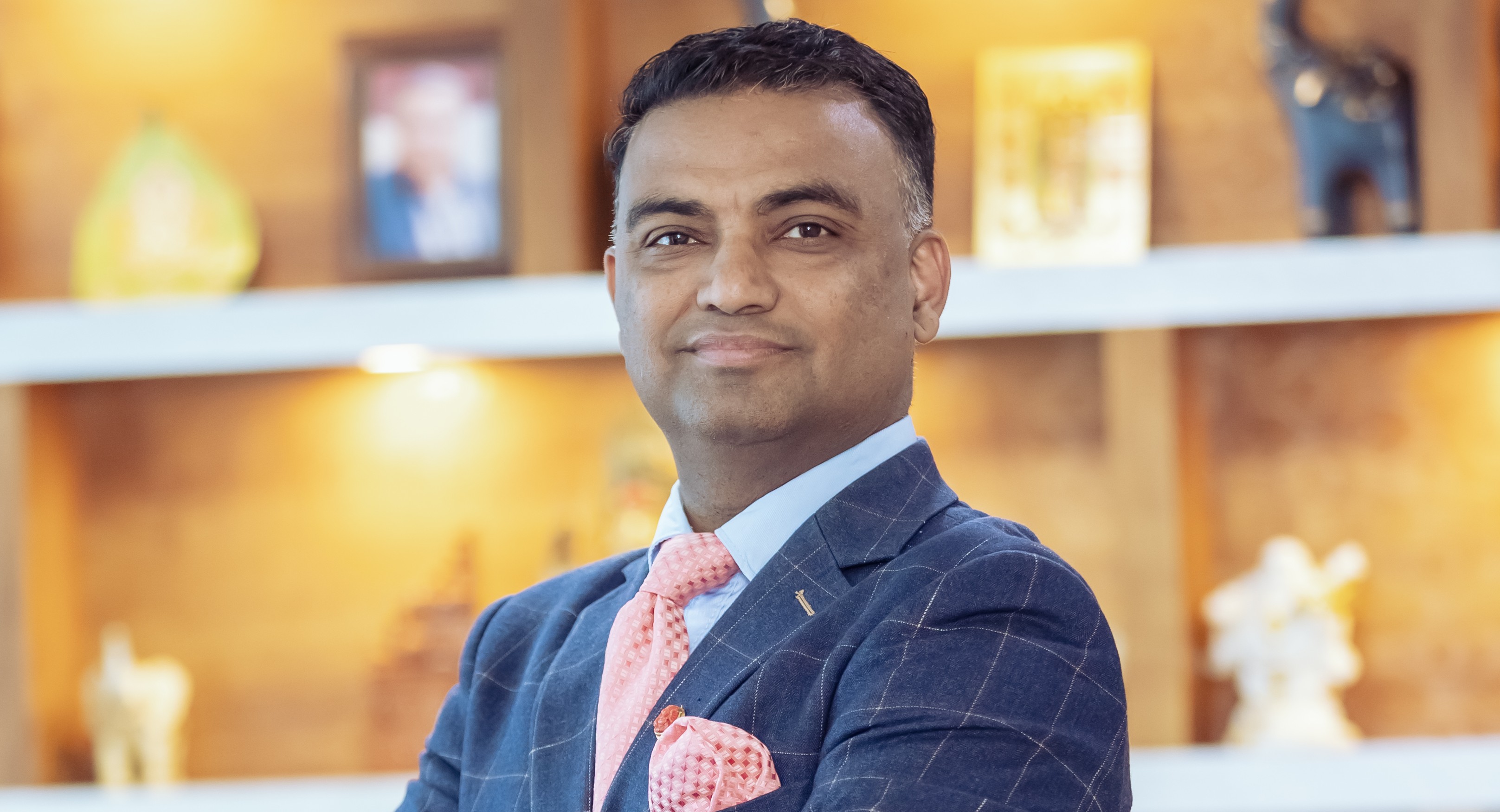
From engineering to enterprise: 22 years of building businesses and jobs in Nepal
Twenty-two years ago, a mechanical engineering graduate began a recruitment business in Nepal, his decision shap ed as much by professional disappointment as by ambition.The regard and remuneration he had expected from his chosen profession had proved elusive; an experience of feeling undervalued became the impetus to establish something of his own. That first company, founded in 2004, would become the starting point for a broader entrepreneurial undertaking, reaching into customer care, technology and hospitality.
At the center of that evolution is Anup Jangam, the first-generation entrepreneur who leads Rolling Group. A diversified conglomerate, the group brings together recruitment and staff outsourcing, contact-center operations, a software development house and hospitality, real estate work including a resort and farmhouse in Dhulikhel. Across his businesses, Jangam reports having helped more than 20,000 people find employment through recruitment, with more than 1,500 people on the direct payroll. Some of these are under staff leasing. His customer-care operations is currently working with more than 25 businesses in Nepal. These figures describe an undertaking whose significance rests in the relationship between individual livelihoods and the everyday needs of enterprise. In this conversation, Jangam reflects on the making of Rolling Group, the contribution of enterprise to Nepal’s economy, and the personal convictions that have accompanied 22 years in business.
1. Your academic training was in mechanical engineering. What prompted you to establish a recruitment company?
I had imagined that an engineering education would lead to work carrying both reasonable remuneration and professional regard. My experience at the time unsettled that expectation. A particular instance of feeling undervalued stayed with me and eventually became a reason to act.
Starting a company offered the possibility of shaping my own working life. Recruitment appealed to me because it dealt with something consequential: the meeting of a person’s aspirations with an employer’s needs. What began as a personal determination gradually acquired a larger purpose. The business would matter to candidates seeking a beginning, to employers building their teams, and to the people whose livelihoods would become connected with our own enterprise. When I finally decided to get into entrepreneurship, I did my MBA from KUSOM which definitely helped me in bringing my academic knowledge in practice into my ventures.
2. How did that first venture develop into the wider portfolio of Rolling Group?
Recruitment gave us an understanding of how businesses depend on people. Staff outsourcing brought a continuing responsibility for employment, while contact-center operations took us into the daily relationship between organisations and their customers. Over time, the portfolio broadened to include a software development house and hospitality through the resort and farmhouse operation in Dhulikhel.
We have also established offices in India and Dubai, alongside IT-related operations in Croatia. Those developments form part of the wider business journey. I see the Rolling Group as the result of this gradual evolution. Each venture has its own demands, yet all require capable people, dependable service and the patience to build something that can endure.
3. Looking back over 22 years, how would you describe your contribution to Nepal’s economy?
I would begin with the work itself. Through recruitment, we have helped more than 20,000 people find employment. Our staff-outsourcing operations have more than 1,500 people on payroll at a time and our customer-care operations have helped almost all big business houses in Nepal for shaping their customer care needs. These figures represent different responsibilities. A recruitment placement helps someone enter an organisation; payroll employment brings an ongoing obligation to the people working through us. Supporting a business through customer care requires consistency in its service to customers.
For me, economic contribution becomes meaningful at this practical level: people earning a livelihood, employers finding the capabilities they need, and businesses receiving services that help them function. Sustaining those relationships over time is the contribution I value.
4. Contact centers are often judged by the volume of calls they handle. What do you consider their deeper value?
A customer usually calls because something requires attention. There may be uncertainty, inconvenience or a concern that has already tested their patience. The quality of that interaction can influence how they regard the entire organisation. A contact center therefore carries a considerable responsibility. It needs people who can listen carefully, communicate with composure and understand the concern behind a question. It also needs systems that make a dependable response possible.
Working with more than 25 businesses in Nepal has given this part of our enterprise particular significance. I regard customer care as a place where an organisation’s promises become visible in ordinary encounters. Trust is built through the way those encounters are handled.
5. What place does the software development house occupy within the group?
Software development adds a distinct professional capability to Rolling Group. It brings us into a field where the quality of an idea must be matched by the discipline of its execution. I see considerable value in creating opportunities for IT professionals to apply their knowledge to useful work. Their development depends on experience, responsibility and the chance to solve problems that have a purpose beyond the screen.
For the group, the ambition is to build a software business that earns confidence through its work. Technical ability, thoughtful design and dependable delivery all matter. For Nepal, I believe the longer-term opportunity lies in giving capable professionals room to develop their expertise and contribute through it. We have offices right now in Dallas, United States, and Croatia . Nepal we are operating as offshore center for these American and European company of ours companies of ours
6. The group also has a resort and farmhouse in Dhulikhel. What drew you toward hospitality?
Hospitality introduces a different sensibility into business. A guest experiences the enterprise through many small details: the welcome, the attentiveness and the care with which the experience is arranged. Those details require as much discipline as any other service. The Dhulikhel venture also gives our work a closer relationship with place. My interest is in developing an enterprise that respects its setting and offers an experience people have reason to return to.
I see hospitality as another avenue through which business can support livelihoods and local activity. Its place within Rolling Group reflects a willingness to work across different sectors while remaining attentive to the people each venture serves.
7. You describe your platform as a social and professional networking site. What was the larger idea behind it?
I wanted to create a space in Nepal where professional relationships could develop over the course of a person’s working life. Finding a vacancy is one part of that experience. There is also the exchange of knowledge, the discovery of people with shared interests, and the gradual building of professional confidence and connections.
The platform has achieved part of that ambition. Its wider possibilities have yet to be used to the extent I had hoped, and I acknowledge that candidly. A platform acquires value through participation. The next task is to make its usefulness sufficiently clear that people return to it, contribute to it and regard it as part of their professional lives.
8. What does 22 years in recruitment teach a person to recognise?
Experience develops discernment. A qualification tells you something about preparation, but an appointment also depends on judgment, temperament, expectations and the actual demands of the role.
I try to understand where a candidate is in their professional development and what the employer actually requires. The employer’s expectations deserve the same scrutiny as the candidate’s readiness. Ambiguity about responsibilities, working conditions or prospects can undermine an appointment that initially appears promising. A seasoned recruiter should be able to look beyond the urgency of filling a position. The responsibility is to help both sides make a considered decision, with a clear understanding of what they are entering and what each can reasonably expect.
9. How does your work as a career coach and personal development mentor relate to recruitment?
Recruitment often brings you close to the uncertainty people feel about their future. They may have ambition without a clear direction, qualifications without confidence, or ability that they have difficulty expressing. Coaching gives me a way to engage with those questions more deliberately. I am interested in helping people understand their strengths, recognise what requires improvement and make choices with greater clarity.
Personal development involves communication, self-awareness, composure and responsibility. These qualities take time to develop. My role, as I understand it, is to encourage that development while allowing the individual to retain ownership of their decisions. Advice has value when it strengthens a person’s capacity to think and act for themselves.
10. Your education spans engineering, management and public administration. How have these disciplines shaped your outlook?
My bachelor’s degree in mechanical engineering, completed in Durgapur, India, gave me a grounding in structure, analysis and the relationship between a problem and its solution. The MBA at Kathmandu University School of Management, Kathmandu University, broadened that understanding toward organisations, people and commercial decisions. The Master of Philosophy in Public Administration at Tribhuvan University invited a wider consideration of institutions and the purposes they serve.
Together, these disciplines have given me different ways of approaching the same question: how can an organisation work well and serve a useful purpose? Experience continues to test the answers. Education provides the foundation; running businesses requires judgment in circumstances that rarely arrive in textbook form.
11. What has leading a diversified group taught you about entrepreneurship?
As a first-generation entrepreneur, I have had to learn how to build the structures on which a business depends. In the beginning, the founder’s energy can carry much of the work. A group of companies requires a more sustained understanding of people, responsibilities and decisions. Recruitment, software development, contact-center services and hospitality have different operating needs. They deserve leadership that understands those differences while maintaining clear expectations about conduct and accountability.
Over the years, entrepreneurship has come to mean stewardship to me. Employees, clients and partners place their confidence in an enterprise. The responsibility is to make that confidence well founded and to build businesses capable of carrying their obligations beyond the enthusiasm of any single individual.
12. Behind the employment figures, what gives this work its personal significance?
Employment enters a person’s life in ways that figures cannot fully convey. An income may bring greater independence, make a family obligation manageable or allow a future plan to take clearer shape. The circumstances differ, but the consequences often extend beyond the workplace.
That understanding gives recruitment its human weight. A decision about employment deserves care because someone will have to live with its consequences. My own attachment to family makes me particularly conscious of this. I know how closely a person’s working life can be connected with the hopes and responsibilities of a household. It is one reason I believe that professional competence should always be accompanied by consideration for the individual.
13. Away from Rolling Group, how do you describe yourself?
Without a bit of doubts , I find myself first as a family man. I live with my parents, my wife, Nisha KC Jangam, and our sons, Aarav and Niven. Those relationships are central to my understanding of a fulfilled life. If you really ask me to choose, my social and family life is more important than my professional life, anyday. Business can give a person a strong public identity. At home, my responsibilities have a more intimate measure: whether I am attentive, dependable and present in the lives of the people closest to me.
I want professional achievement to sit comfortably within that life. The ambition to build businesses matters, but so does the quality of the relationships that accompany it. Family helps me keep the scale of each in view.
14. What does living in a joint family bring to your outlook?
A joint family allows different generations to share the same everyday life. It asks for patience, consideration and an understanding that people may bring different expectations to the same situation.
Living with my parents gives continuity to our household, while raising our sons brings its own questions about the future. There is something valuable in holding those perspectives together. It also reminds me that responsibility is expressed through ordinary conduct. Respect, care and the willingness to listen have to be practised. I would like those qualities to be visible in my professional life as well. The roles are different, but the character one brings to them should have some consistency.
15. What would you most like your sons into their own lives? What is your message for the new generation including your sons.
I would like them to grow into people of integrity, with consideration for others and the confidence to think independently. Their paths should allow room for their own interests and abilities. I hope they learn to respect work, remain willing to learn and understand that the way they treat people will matter wherever life takes them. Fatherhood also asks me to examine my own example. Children are able to see whether the values we speak about have a place in our conduct. I would want them to recognise in me someone who took his responsibilities seriously and gave the people in his life the attention they deserved.
16. What would you like the next phase of Rolling Group—and your own life—to represent?
I would like the next phase to give greater depth to what we have built. That means strengthening our recruitment and staffing services, developing the quality of our contact-center work, and allowing the software and hospitality businesses to mature with clear purpose. The networking platform remains an important ambition. I want it to become more useful in the professional lives of the people it was created to serve.
For me, the measure of progress will include the dependability of our enterprises and the opportunities they make possible. Alongside that, I want to remain attentive to my family. After 22 years, I value a future in which the businesses can grow with substance and the relationships closest to me continue to receive their proper place.